The Chiang Mai University (CMU) Employee Council was established pursuant to Section 33 of the Chiang Mai University Act, B.E. 2551 (2008). Under Section 34 of the same Act, the Employee Council is mandated to serve as a liaison between CMU employees and the University, foster positive relationships among employees, and provide recommendations and consultation to the University on matters concerning employees’ rights and basic welfare.
Furthermore, the University's highest governing body provides two seats for the President and one representative member of the CMU Employee Council, enabling the Council to represent employees’ interests and advocate for their rights and welfare at the institutional level.
Beyond its statutory responsibilities for providing recommendations and consultation, the CMU Employee Council plays an important role in promoting staff well-being, fair remuneration, and equality. Through policy advocacy and engagement with university personnel, the Council seeks to strengthen staff welfare and benefits, support career development, and foster an inclusive working environment for employees across different employment categories, including women and international staff.
To ensure employees have accessible channels for communication and support, the Employee Council also provides an OpenChat channel through which employees can seek advice and consultation regarding their rights and well-being, as well as submit complaints and suggestions. This channel serves as a means of identifying employee concerns, facilitating appropriate responses, and seeking solutions to issues raised.
A Shift Toward Policy-Driven Staff Welfare and Representation
Over the past three years, the Chiang Mai University Council has expanded its role from organizing welfare-related activities to becoming a mechanism for policy advocacy and the systematic representation of university personnel. Its approach emphasizes gathering staff feedback, conducting opinion surveys, coordinating with university management, and continuously monitoring personnel's quality of life. Through these efforts, the Council's work can be organized into two principal areas: (1) Advancing Staff Benefits and Welfare and (2) Listening to and Supporting University Personnel. Together, these areas enable the Council to identify staff needs, advocate for improvements to existing benefits, and represent personnel's interests in university policy discussions. The main activities from each principal areas are listed as follows:
The main activities from each principal areas are listed as follows:
(1) Advancing Staff Benefits and Welfare includes
1.1 Advocating for the “Track 2” Academic Position Allowance:
The Council has advocated for the Track 2 academic position allowance as a means of providing academic personnel with opportunities to express their opinions and share feedback regarding the effects of the allowance rates they receive. This process supports more informed consideration of academic personnel's remuneration and professional needs.
1.2 Proactively Improving Quality of Life:
The Council proactively reviews and advocates for improvements to existing staff benefits and welfare provisions. These efforts aim to ensure that welfare arrangements better reflect the needs and circumstances of personnel across the University.
1.3 Studying Post-Retirement Welfare Models:
The Council has examined post-retirement welfare models to explore approaches that can better support personnel after retirement. This work considers the diverse needs of retirees and seeks to identify opportunities to strengthen long-term financial security, healthcare access, and overall quality of life.
(2) Listening to and Supporting University Personnel includes
2.1 Creating Opportunities for Direct Engagement with Staff:
The Council organizes activities that enable its members to meet directly with university personnel, communicate updates on operational matters, and provide information about staff benefits and welfare. These activities also establish channels through which personnel can communicate their concerns, expectations, and suggestions directly to the Council.
2.2 Strengthening Communication Between Staff and University Executives:
The Council facilitates communication and exchanges of views between university personnel and executives. These opportunities allow staff to receive updated information about welfare provisions and communicate their feedback directly to decision-makers. This approach strengthens engagement between personnel and university management and supports the further development of staff benefits and welfare policies.
Policy Innovations to Promote Respect, Value, and Equality
In addition to advocating for improvements in staff benefits and welfare, the Chiang Mai University Council promotes proactive communication and awareness across the university community through the principles of “Respect, Value, and Equality.” This approach emphasizes that all personnel should have equitable access to relevant information and meaningful opportunities to express their opinions, regardless of their positions or employment categories.
1. Expanding Financial Benefits and Fundamental Welfare Provisions:
The Council advocates for improvements to financial benefits and fundamental welfare provisions to strengthen personnel's long-term financial security and accommodate their needs at different stages of life. Key proposals include increasing the University's contribution to the provident fund and expanding the coverage and value of Flexible Benefits. These measures aim to enhance financial preparedness for the future and provide welfare options that better reflect the diverse circumstances and life stages of university personnel.
2. Advocating for Post-Retirement Healthcare Benefits:
The Council is advocating for improved access to healthcare after retirement. One proposal seeks to enable personnel who have used the Social Security system for at least 10 years before retirement to access healthcare under Thailand's Universal Coverage Scheme, commonly known as the “30-Baht Healthcare Scheme,” at Maharaj Nakorn Chiang Mai Hospital. In addition, the Council has proposed that the University establish a policy encouraging or requiring all newly recruited personnel to select Maharaj Nakorn Chiang Mai Hospital as their primary healthcare facility under the Social Security system. These proposals aim to strengthen continuity of care and improve access to healthcare services for university personnel, particularly during retirement.
3. Expanding Family Welfare and Childcare Support:
The Council advocates for the expansion of family-related welfare provisions to better support personnel with children and strengthen the University's ability to retain its workforce. One proposal is to increase the number of admission places at Chiang Mai University Demonstration School allocated to the children of university personnel. Furthermore, the Council is exploring the feasibility of establishing childcare facilities for employees' children. A potential approach is to pilot a small, flexible childcare center or provide services during school holidays before considering broader implementation. The proposal also encourages collaboration with university faculties specializing in early childhood development and health to ensure that childcare arrangements are appropriate and responsive to children's needs. Moreover, the University will explore opportunities to further enhance maternity leave support for female employees.
4. Promoting Career Advancement for Support Personnel:
The Council advocates for greater career advancement opportunities for support personnel, particularly opportunities to progress into executive positions at the faculty or organizational level. This initiative reflects the principle that career development and professional advancement are integral components of staff welfare and long-term work motivation, rather than benefits limited to financial compensation or material assistance. By promoting broader access to leadership opportunities, the Council seeks to support professional growth, recognize the contributions of support personnel, and foster a more equitable career development environment across the University.
Through policy advocacy, staff engagement, and the development of welfare proposals, the Chiang Mai University Council promotes a more responsive approach to personnel management and staff well-being. Its initiatives address key dimensions of labour rights and employee welfare, including fair remuneration, financial security, healthcare access, family support, career advancement, and participation in university decision-making. These efforts aim to protect employees’ fundamental labour rights, promote equitable treatment, and ensure access to essential benefits and opportunities that support their well-being and quality of life.
The Chiang Mai University Employee Council Outstanding Activities
Promoting healthy lifestyles and preventive healthcare

On August 13, 2025, the CMU Employee Council's Health Innovation and Personnel Health Promotion Division organized the Healthy Party for Life 2025 event, featuring health role models, knowledge-sharing on health promotion, and a healthy food competition highlighting low-glycemic foods at Chiang Mai University Sport Center. The event also included a presentation on low-glycemic diets to support weight management and prevent chronic diseases among CMU personnel.


Strengthening personnel networks and professional development


The CMU Employee Council supported knowledge-exchange activities through professional networks, including initiatives involving information technology, educational personnel, and nursing personnel. Topics included cybersecurity self-assessment, essential professional skills, and collaborative learning to improve work practices and professional capabilities.
Reviewing staff welfare priorities and planning future initiatives
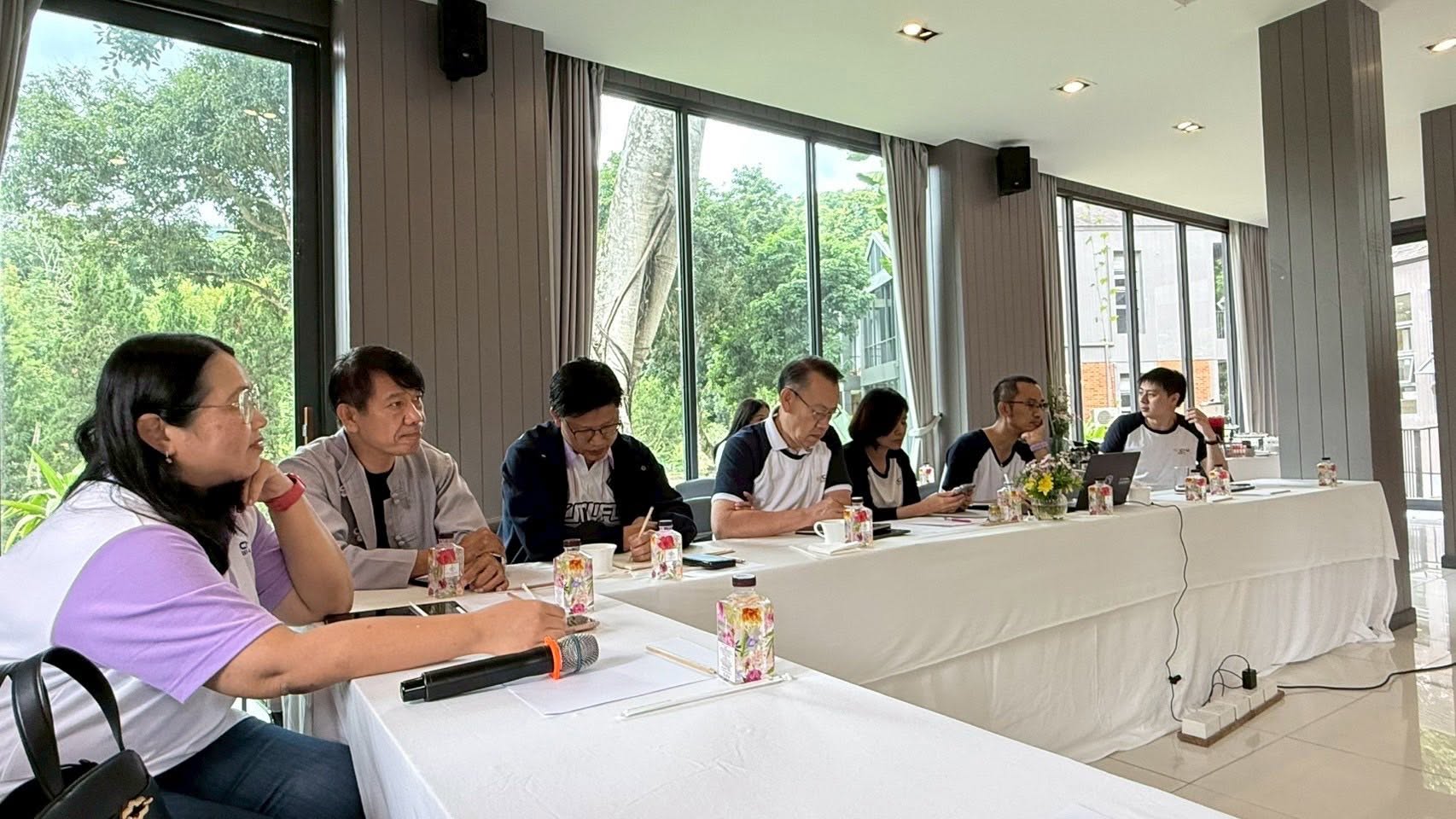

The CMU Employee Council organized an off-site seminar to review its operations, assess progress, and formulate plans for the following year. The seminar provided an opportunity to identify key priorities and discuss the continuation and improvement of initiatives related to personnel welfare and representation. It also encouraged employee representatives to actively participate in discussions, share their perspectives, and contribute to decisions concerning staff welfare and related matters.
Through these activities, the CMU Employee Council aims not only to raise employees’ awareness of their rights, entitlements, and benefits as members of the CMU community, but also to ensure that all employees have access to their fundamental rights and benefits, as well as appropriate support and solutions to address any concerns or issues they may encounter.
Law Support Addressing Appeal Process
Furthermore, Chiang Mai University (CMU) provides a Voice of Customer (VOC) platform to collect feedback, suggestions, and complaints from students, staff, alumni, and members of the general public regarding the University's services. The feedback received is used to identify areas for improvement, enhance service quality, and ensure that services better address the needs and expectations of stakeholders.
The VOC submission process is as follows:
- Access the VOC CMU website: Visit the University's Voice of Customer (VOC) platform.
- Select the responsible unit: Choose the faculty or division to which the feedback or complaint should be directed.
- Specify the type of submission: Select one of the available categories: Suggestions, Complaints, or Reports of Corruption.
- Review the Terms of Use: Read the terms and conditions and agree to proceed.
- Submit the feedback: Complete the required information and submit the form.
- Review and follow up: The Chiang Mai University Employee Council receives the submitted complaints and suggestions for consideration. If a case requires legal consultation or further legal proceedings, the Council forwards the matter to the Chiang Mai University Legal Affairs Division for further consultation, mediation, and appropriate action.

Under the Chiang Mai University Legal Affairs Division, the Chiang Mai University Mediation and Reconciliation Center provides dispute mediation, legal consultation, and assistance with disciplinary matters and the rights and benefits of staff and students. The Center offers access to professional legal experts who provide guidance and support in addressing legal concerns. To ensure accessibility, services are available through both online and on-site channels, allowing individuals to seek assistance conveniently.
All mediation and consultation processes are conducted impartially and confidentially, in accordance with professional ethical standards. University personnel can access these services through multiple communication channels, including telephone, email, and the Center’s official LINE account. Through these services, the Center supports access to justice, protects individual rights, and promotes fair and impartial dispute resolution within the university community.
In summary, Chiang Mai University demonstrates its commitment to protecting employee rights, promoting workplace equality, and ensuring personnel welfare through the complementary roles of the CMU Employee Council and the Legal Affairs Division. While the CMU Employee Council supports the continuous development of employee welfare provisions in response to personnel needs and evolving workplace standards, the Mediation and Reconciliation Center under the Legal Affairs Division provides legal consultation, confidential mediation, and assistance with disputes and matters concerning staff rights and benefits. Together, these mechanisms help strengthen institutional accountability, ensure fair treatment, and provide accessible channels for employees to seek support and resolve concerns. Through these efforts, CMU aims to foster a safe, inclusive, and equitable working environment, with particular attention to the needs of women and international staff, where all personnel are respected, protected, and empowered to contribute to the University's sustainable development.
Sources:
- Legal Affairs Division, Chiang Mai University
- Chiang Mai University Employee Council, Chiang Mai University [Facebook]