Chiang Mai University recognises that food security and sustainable agriculture depend on whether local farmers and food producers can access the knowledge, skills and technology they need to grow, process and market safe, nutritious food. Smallholder farmers, cooperatives and community enterprises often have limited access to modern know-how, laboratories, pilot-scale facilities and product development support, which affects their incomes, livelihoods and the resilience of local food systems. In support of Sustainable Development Goal 2 (Zero Hunger), the University provides access to food security and sustainable agriculture knowledge, skills and technology, organises events that connect local farmers and food producers and transfer knowledge, and opens its university facilities to them to improve sustainable farming practices. The following sections describe how this is put into practice, through hands-on events and training and access to university facilities and technology.
Chiang Mai University Events Connecting Local Farmers and Food Producers: Knowledge Transfer and Hands-On Training for Sustainable Agri-Food Systems
Chiang Mai University organises events for local farmers and food producers that connect them with university experts, partners and one another, and transfer knowledge on sustainable agriculture and agri-food practices. Through hands-on workshops, training and knowledge-exchange activities, farmers, local entrepreneurs, cooperatives and community enterprises gain the knowledge and skills they need in value-added processing, sustainable food product development and food shelf-life extension, so that they can apply what they learn to their own products and communities. These events also build networks among local farmers and food producers, academia, government agencies and the private sector. The following activities show how this is put into practice.
Chiang Mai University and Harper Adams University Workshop on Sensory Consumer Science in Product Development for Sustainable Agri-Food Supply (10–11 June 2025)
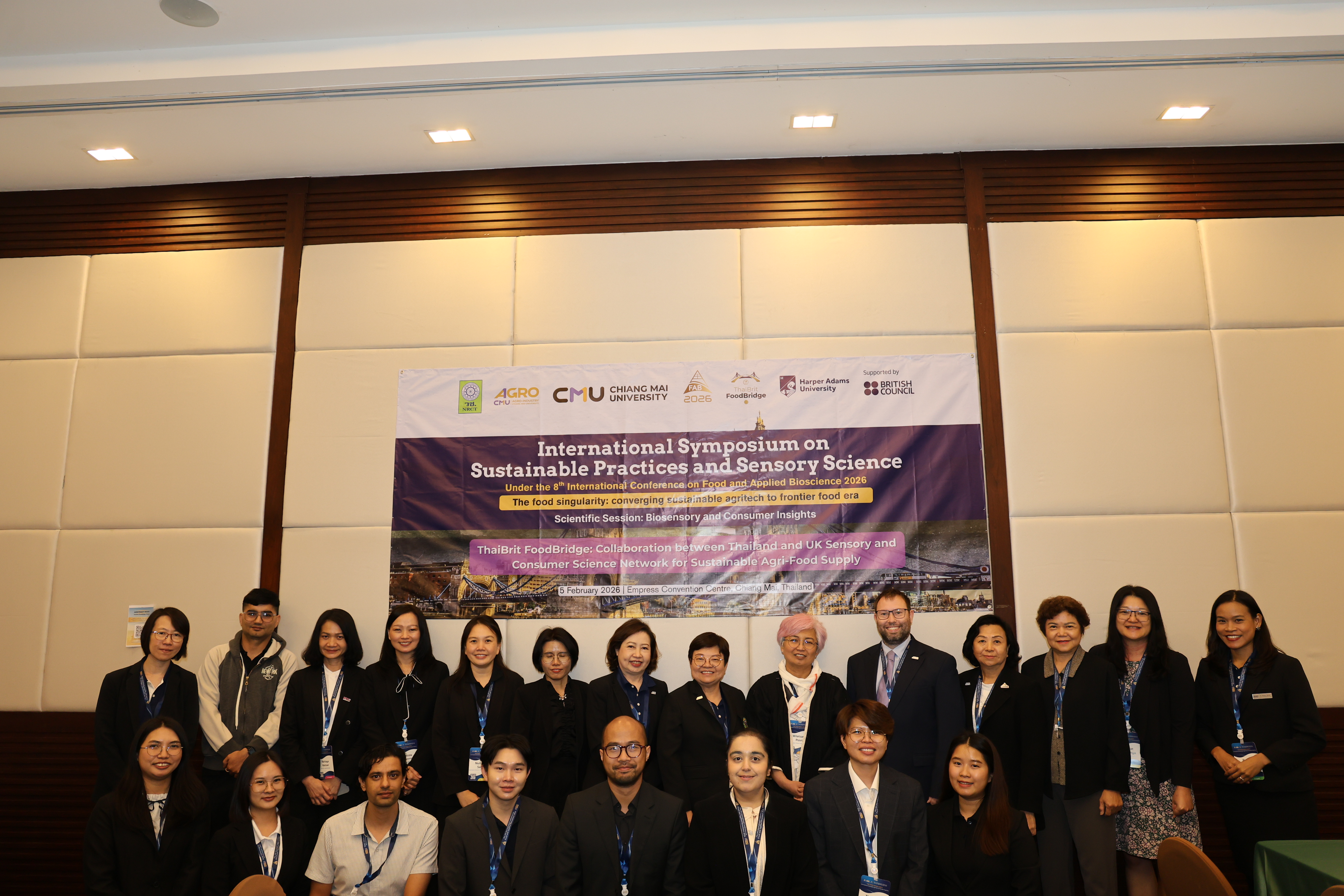
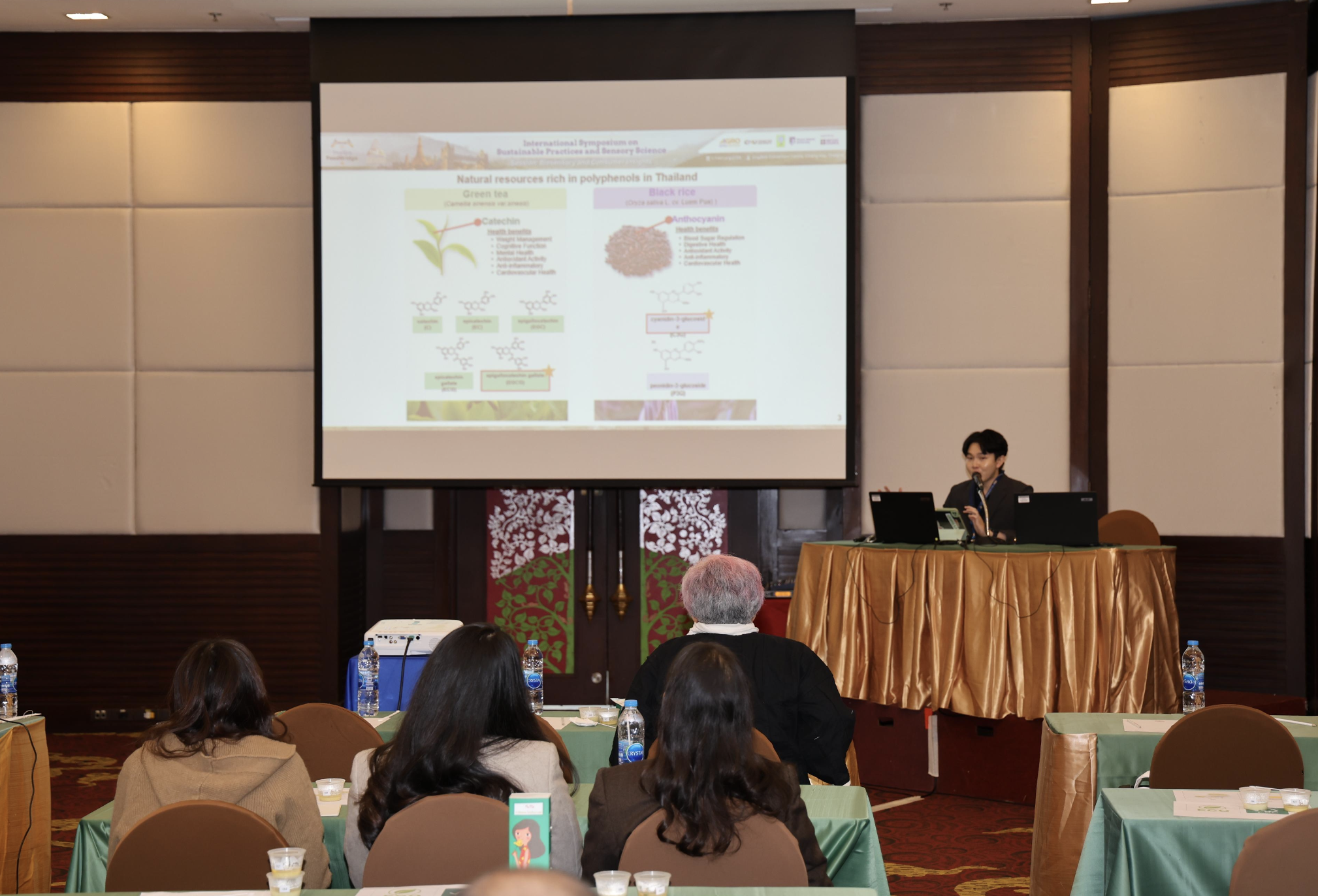
The Faculty of Agro-Industry, together with Harper Adams University (UK), organized a two-day hands-on workshop and knowledge-transfer event on Sensory Consumer Science in Product Development for Sustainable Agri-Food Supply under the ThaiBrit FoodBridge project, a Thai–UK collaboration that connected local entrepreneurs and food producers with university experts and international specialists. The event was free of charge and open to educational institutions, government agencies, entrepreneurs, cooperatives, and community enterprises in northern Thailand, with free lunch and refreshments, free accommodation for participants from outside Chiang Mai, Lamphun, and Lampang, and the opportunity to receive product development funding. It took place on 10–11 June 2025 at Kantary Hills Hotel, Chiang Mai, bringing together more than 34 participants from the private sector, communities, and academia to learn from and exchange knowledge with speakers from Harper Adams University (UK), the Chiang Mai Provincial Public Health Office, and the Faculty of Agro-Industry. The programme covered sensory evaluation, carbon and water footprint analysis, alternative raw materials for sustainability, formulation design and nutritional claims, consumer testing methods, and prototyping. At the close of the event, participants were awarded certificates by the Associate Dean of the Faculty of Agro-Industry.
Chiang Mai University Value-Adding Processing Workshop for Farmers, Pa Sak Subdistrict, Lamphun
The Multidisciplinary Research Institute (MDRI), Chiang Mai University, organized a hands-on workshop to promote processing concepts and skills among farmer groups, helping them add value to local raw materials and create sustainable career opportunities. The workshop took place on 16 November 2025 at the Dok Sak 1 Meeting Room, Pa Sak Subdistrict Municipality, Mueang District, Lamphun, with more than 20 farmers, featuring a lecture on using agricultural waste to develop healthy food innovations, a demonstration of basic processing of beverages and processed food products, and hands-on practice.
Chiang Mai University Training on Basic Techniques for Extending Product Shelf Life for Local Entrepreneurs
The Faculty of Agro-Industry (Samut Sakhon) and the Food Innovation and Packaging Center (FIN), Chiang Mai University, organized a training on basic techniques for extending product shelf life under the 2025 project to strengthen academic service networks, local entrepreneurs, and educational institutions. It took place on 26 March 2025 at the Faculty of Agro-Industry (Samut Sakhon), featuring a lecture on shelf-life extension techniques, a presentation on food shelf-life analysis and testing, and field visits with consultation at Sirikhun Seafoods and Thitinan Food to guide local entrepreneurs in further product development.
Chiang Mai University Provides Local Farmers and Food Producers with Access to University Facilities and Technology
Chiang Mai University provides local farmers and food producers with access to university facilities, including laboratories, pilot plants, equipment and technology, to help them improve sustainable farming practices and develop safer, higher-quality food products. This access turns university research and innovation into practical tools that farmers, local entrepreneurs and food producers can use in their own operations, through technology transfer, laboratory analysis and testing, and prototype production.
Chiang Mai University Provides Access to Sustainable Agri-Food Technology and University Facilities for Farmers and Food Producers: Black Soldier Fly Larvae Animal Feed

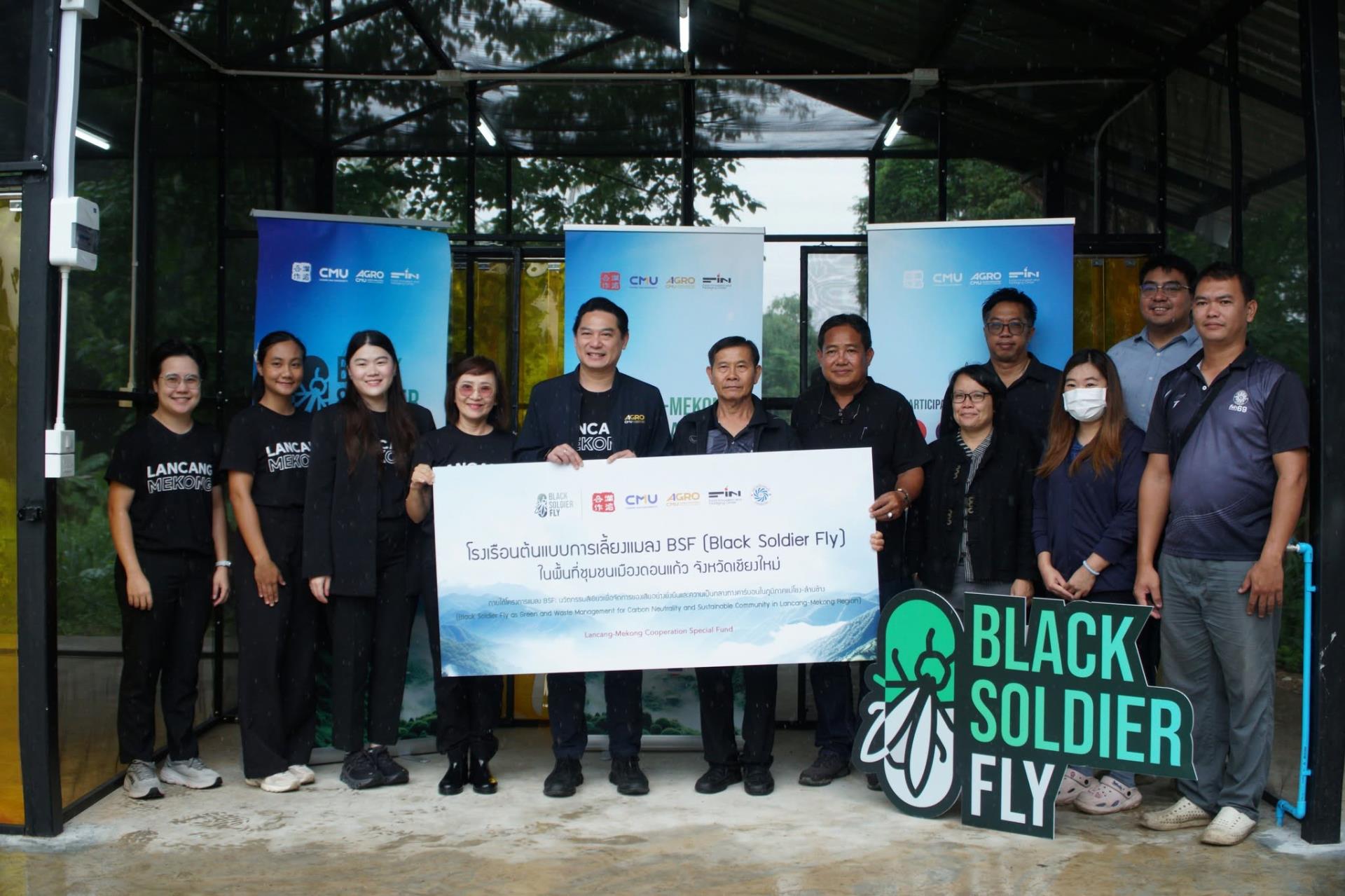
Chiang Mai University, through the Food Innovation and Packaging Center (FIN), provides access to sustainable agri-food technology, knowledge, skills and university facilities for farmers and food producers through the project “Innovation System for Surplus Food Management with Black Soldier Fly Larvae for High-Protein Animal Feed”. The project established a university system, with its facilities and equipment, that uses black soldier fly larvae to convert surplus food into high-protein animal feed, a sustainable feed source that supports sustainable agriculture and food security while reducing the cost of food waste management. The feed is tested for safety to meet standards, and the University promotes its commercial application, so that this technology and knowledge can be transferred to the animal feed and insect farming industries, farmers, the waste management industry and waste management agencies, supporting more sustainable farming practices in animal feed and insect farming. The project advances the University’s “BCG Mae Hia Model”, a pilot area that balances economic growth with the conservation of natural resources, and integrates research, innovation and educational technology with academic services to society and the economy, connecting the University with farmers, food producers and industry partners. Its activities comprised testing the disposal of surplus food with black soldier fly larvae and developing high-protein animal feed from the larvae.
Chiang Mai University Brings UTD RF Technology to Rice Farmers and Communities: Safer, Higher-Value Rice Products
Chiang Mai University, through the Technology Pilot Plant of its Science and Technology Park (STeP), gives local farmers and communities access to university technology and facilities, namely UTD RF technology, to improve sustainable farming practices and post-harvest quality. Hom Mali rice (RD15) processed with this technology is pest-free, safe and free of chemicals, and is sold under the community brand “Kai Fah Phaya Lor”. Local farmers were able to raise the value of their milled rice from 40 Baht to 80 Baht per kilogram for 300 kilograms, showing how university access supports farmers’ incomes, safer food and sustainable livelihoods.
Chiang Mai University’s RD Facilities Boost Up Project: Laboratory and Pilot Plant Access for Regional Entrepreneurs
Through the RD Facilities Boost Up project, Chiang Mai University gives regional entrepreneurs and local food producers access to university facilities, including laboratories and pilot plants, for scientific analysis, testing and innovation development. A total of 30 entrepreneurs took part: 21 used laboratory analysis and testing, and 9 also produced prototype products in the Food Innovation Pilot Plant for market testing, helping local producers upgrade their products and strengthen their businesses.
Chiang Mai University’s Innovative Food Laboratory for Industry (INFLI): Food Analysis and Shelf-Life Testing Services
The Innovative Food Laboratory for Industry (INFLI) of Chiang Mai University provides access to university laboratories and equipment for food analysis, shelf-life testing and sensory evaluation, so that local food producers and entrepreneurs can develop safer, higher-quality food products. In fiscal year 2025, 60 users (26 of them repeat users) used the laboratory more than 151 times, covering more than 403 products and 1,537 test parameters, with an average satisfaction score of 91.73%.
In summary, Chiang Mai University advances Sustainable Development Goal 2 (Zero Hunger) by providing local farmers and food producers with access to sustainable agriculture and agri-food knowledge, skills and technology, organising events that connect them and transfer knowledge, and opening university facilities such as laboratories, pilot plants and technology to them. Through hands-on workshops and training, UTD RF technology, the RD Facilities Boost Up project, black soldier fly larvae facilities and the INFLI laboratory, the University strengthens the capacity of farmers, local entrepreneurs, cooperatives and community enterprises, improves sustainable farming practices, and supports food security, sustainable livelihoods and local food systems.
Source :
กิจกรรม อบรมเชิงปฏิบัติการด้านการพัฒนาผลิตภัณฑ์อาหารอย่างยั่งยืน หัวข้อ "Sensory Consumer Science in Product Development for Sustainable Agri-Food Supply"
กิจกรรมการอบรมในหัวข้อ “เทคนิคพื้นฐานในการยืดอายุการเก็บรักษาผลิตภัณฑ์”
นักวิจัย MDRI-CMU ถ่ายทอดองค์ความรู้การแปรรูป เเละเสริมทักษะการสร้างมูลค่าเพิ่มแก่เกษตรกรตำบลป่าสัก ลำพูน